What a softer detached-home market does and does not change for a multiplex project
In August 2026, Metro Vancouver’s sales-to-active-listings ratio was 12.3% across all property types. For detached homes, the kind of property most multiplex projects start with, it was 9.6%. Greater Vancouver REALTORS describes a ratio below 12% that is sustained over several months as the range where downward pressure on prices becomes more likely. One month is a snapshot, not a trend, so the current figure is worth checking before any decision.
So is this a good time to start a multiplex? The honest answer is that a softer market for detached homes can help with one part of the project, the purchase of the lot. It does not decide whether the whole project works.
Is Metro Vancouver in a buyer’s market right now?
Greater Vancouver REALTORS publishes the sales-to-active-listings ratio each month and uses it as a rough guide. In general terms, a ratio below 12% sustained over time points to downward pressure on prices, a ratio between about 12% and 20% points to a balanced market, and a ratio above 20% points to upward pressure. Using its August 2026 statistics package, the overall market sat at the top edge of that lower range, while detached homes sat below it.
That split matters for a multiplex. A condo buyer and a multiplex developer are looking at different segments of the market, and the segment that is softer in August is the one where lots are found.
Why does the detached-home market matter for a multiplex?
Most multiplex projects begin with an existing detached house on a lot that the zoning may allow to hold more homes. When more detached homes are for sale and fewer buyers are competing for each one, a buyer may have more time, more choice and more room to negotiate. That can reduce the land cost, which is usually one of the largest single numbers in a development budget.
It is a real advantage, but it is one input. A lower purchase price does not change what the project costs to design, permit and build, and it does not change what the finished homes are worth when they are ready.
What else decides whether a multiplex project works?
A project can look attractive at the land stage and still fall short once every cost is counted. These are the main items to price, with preliminary 2026 Vancouver allowances. They are not quotations, they should not be added together as a budget, and they vary by property.
- Construction. Hard costs are often in the range of $400 to $450 per square foot for this type of building. Our multiplex cost guide shows how this translates by project size.
- Design and permits. Design fees commonly run from about $80,000 to $150,000 or more, and permit fees from about $15,000 to $40,000 or more, depending on size and complexity.
- City and regional charges. Development cost charges and related fees can add up to a large sum. The Metro Vancouver district charge alone is scheduled to rise by 56% by 2027, so timing can affect the total.
- Financing and carrying costs. Interest during design, permitting and construction is a cost that grows with every month the project takes.
- Contingency. Around 20% is a common allowance for projects that involve existing structures or unknown site conditions.
What matters more than today’s market?
A multiplex is a project that takes time. The land is bought now, but the homes are usually sold or rented after design, permitting and construction are finished. The market that matters for the finished homes is the one that exists then, not the one that existed when the lot was purchased.
For that reason, a sensible budget tests more than one outcome. It asks what happens if finished values are lower than expected, if construction takes longer, or if financing costs more. A buyer’s market does not remove those risks, and it is not a reason to skip them.
What should be checked before buying a lot?
Each property needs its own review. At a minimum, a feasibility review looks at:
- What the current zoning allows on that specific lot, and whether the lot meets the City’s size and access requirements
- The condition and location of the existing house, and whether it is better kept or replaced
- Trees, slope, soil and any covenants or easements that affect where a building can go
- Utility connections and servicing, which can change the budget on their own
- The cost and timing of City approvals for that municipality
Our multiplex construction page explains how this works in Vancouver, and our guides for Burnaby and Coquitlam cover those cities. Rules differ between municipalities, so each one needs its own check.
Example: a multi-unit project in Burnaby
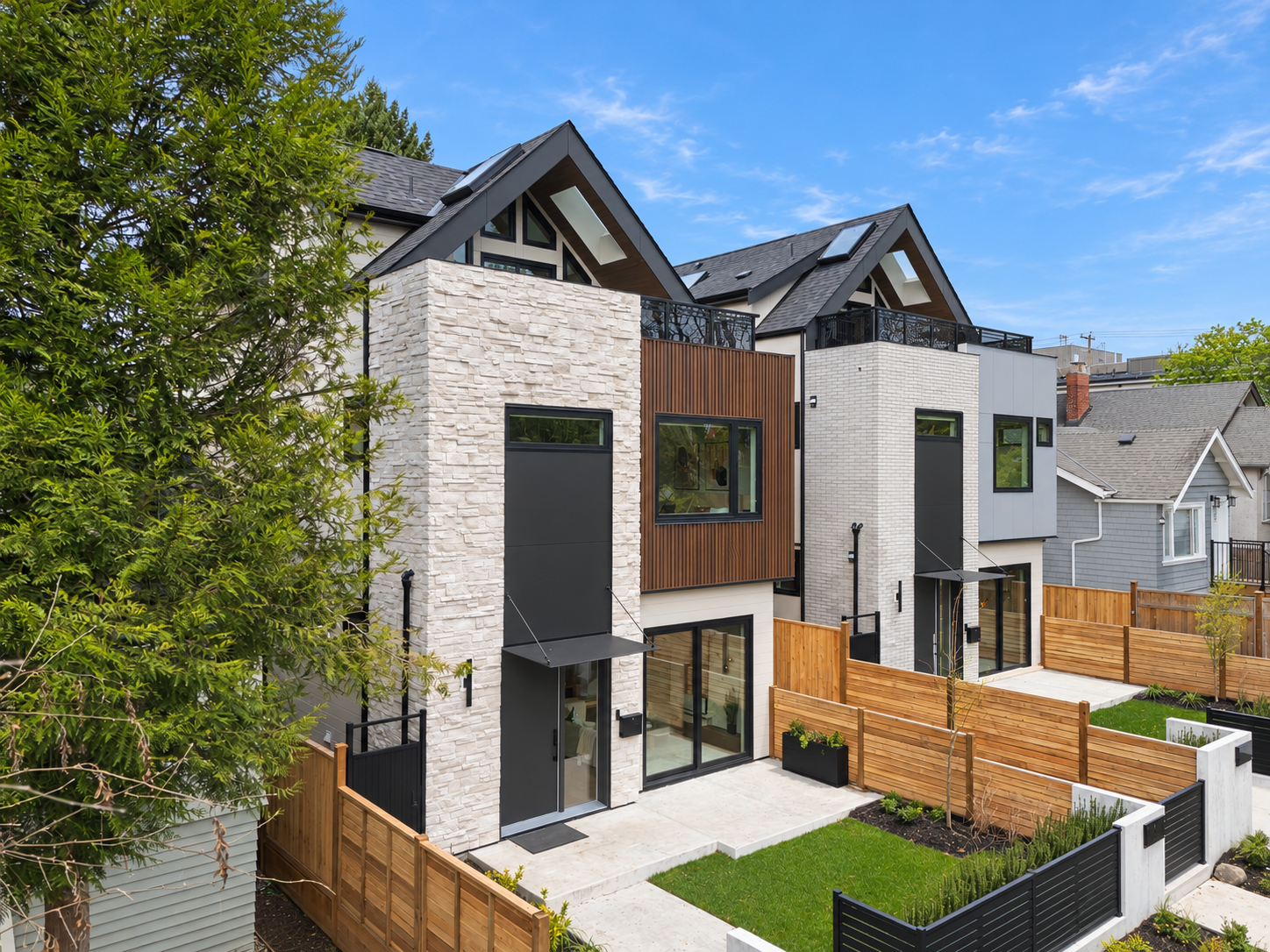
Our 6-unit project in Burnaby is one example of how a lot can be designed to hold several homes. Every lot is different, and a project like this started with a feasibility review of the site before any drawings were done.
What is the first step?
Before committing to a purchase, ask for a site-specific feasibility review with a preliminary budget. If the lot is a candidate for either a duplex or a multiplex, request two comparable budgets so the options can be compared on the same basis. Our process locks in the budget before construction begins, and because design and construction are one team, the numbers in the feasibility review are the numbers we build to.
Frequently asked questions
Is a buyer’s market always a good time to buy a lot for a multiplex?
Not necessarily. A softer market can help with the purchase price, but the project still has to work once design, permits, construction and financing are included.
Does a lower sales ratio mean prices will keep falling?
Not always. The ratio is a guide, not a forecast. Greater Vancouver REALTORS treats it as a signal over time, so one month does not settle the question.
Should I wait for prices to drop further before starting?
That depends on the property and on how long the project will take. Waiting has its own costs, including fee changes and carrying costs, and the best timing differs for each site.
Can I build a multiplex on any detached lot?
Potentially, but not on every lot. Lot size, access, servicing and local zoning all affect what is possible, so confirm for your property before purchase.
What is the difference between a duplex and a multiplex?
A duplex has two homes. A multiplex has three or more. Which one suits a lot depends on its size, the zoning and the budget. See our guide to duplex vs multiplex in Vancouver for more.
How much does a multiplex cost to build in Vancouver?
Costs depend on the number of homes, finishes, site conditions and City charges. Our cost guide gives preliminary ranges, and a feasibility review gives a figure for a specific lot.
Let’s Look at Your Lot
Whether a multiplex makes sense now is a question with a real answer, and it comes from your lot, your budget and your goals, not from a headline. We have been a Design + Build firm in Vancouver for over twenty-five years, with design, permitting and construction under one roof.
Send us the address you are considering. We will tell you what the lot may allow and what the numbers look like. Let’s create your Amazing Space.
References
- Greater Vancouver REALTORS – Stats Package, August 2026
- City of Vancouver – Small-Scale Multi-Unit Housing guide
Note: This is general information, not confirmation of development rights or market conditions on a specific property. Market statistics change monthly. Current zoning, fees and permit requirements must be verified for each site.