Vancouver homeowners and investors are waking up to one of the most significant real estate opportunities in the city’s history. The 2023 R1-1 zoning changes opened the door to multiplexes on what were once single-family lots across Metro Vancouver and the financial case has never been stronger. But before you commit to a project, you need an honest, number-by-number answer to the question everyone is asking: how much does it actually cost to build a multiplex in Vancouver?
This guide breaks down every cost category, from hard construction costs per square foot to city fees, soft costs, and the hidden expenses that catch first-time developers off guard. You’ll leave with a realistic budget framework and a clear picture of what your specific project could look like.
Worth knowing before you read on: Metro Vancouver’s regional Development Cost Charge (DCC) is rising 56% between 2025 and 2027, from $21,941 per unit to $34,133 per unit. That makes 2026 the last affordable window to lock in current rates.
What Drives Multiplex Construction Costs in Vancouver
Multiplex budgets in Vancouver break down into four broad buckets. Understanding each one is the difference between a proforma that holds and a project that stalls halfway through.
Hard Costs (Construction)
Hard costs cover everything the trades physically build: excavation and foundation, framing, roofing, windows, mechanical, electrical, plumbing, insulation, drywall, and all interior finishes. As of Q1 2026, wood-frame multiplex construction in Metro Vancouver runs $400 to $450 per square foot for a mid-range finish. Premium finishes or complex site conditions push that toward $500 per square foot.
Soft Costs (Design, Engineering, and Permits)
Soft costs are the professional services that get your project from concept to construction drawings. For a Vancouver multiplex, expect soft costs to land between 7 and 12% of your total project budget. That includes architectural and building design, interior design, landscape design, structural engineering, mechanical and electrical engineering, a geotechnical report, a survey, energy compliance modelling, and legal fees for strata or rental registration.
City Fees and Municipal Charges
This is where Vancouver multiplexes get expensive fast. City fees alone run from $185,000 on a small fourplex to over $640,000 on a six-unit strata on a wider lot. We cover this in detail below.
Contingency
A 10% contingency is not optional. Permit delays, material cost swings, unforeseen site conditions, and scope changes are facts of life in Vancouver construction. Budget for them before you start.
Multiplex Construction Cost by Project Type (2026 Estimates)
The table below reflects typical all-in construction ranges for Metro Vancouver in 2026. These figures cover hard costs, soft costs, city fees, and contingency, but exclude land acquisition.
Room/Area | Entry-Level | Mid-Range | High-end/custom |
|---|---|---|---|
Kitchen | $35,000 – $55,000
| $60,000 – $100,000
| $100,000 – $185,000+
|
Primary Bathroom
| $20,000 – $30,000
| $30,000 – $55,000
| $55,000 – $100,000+
|
Secondary Bathroom
| $15,000 – $25,000
| $25,000 – $45,000
| $45,000 – $75,000+
|
Living / Dining Room
| $20,000 – $40,000
| $40,000 – $80,000
| $80,000 – $150,000+
|
Primary Bedroom
| $15,000 – $30,000
| $30,000 – $60,000
| $60,000 – $100,000+
|
Basement (per 1,000 sqft)
| $50,000 – $80,000
| $80,000 – $150,000
| $150,000 – $250,000+
|
Full Home (2,000 sqft) | $300,000 – $400,000
| $400,000 – $600,000
| $600,000 – $1,200,000+
|
Note: Ranges cover mid-range finishes in Metro Vancouver. Costs exclude land. Sixplex and fiveplex projects require lots with access to frequent transit or larger lot sizes under R1-1 zoning.
Vancouver Multiplex City Fees: The Cost Everyone Underestimates
City fees are where Vancouver multiplex budgets quietly blow up. Most first-time developers budget $50,000 for “government fees” and get hit with $250,000. Here is exactly what you owe, at 2026 rates.
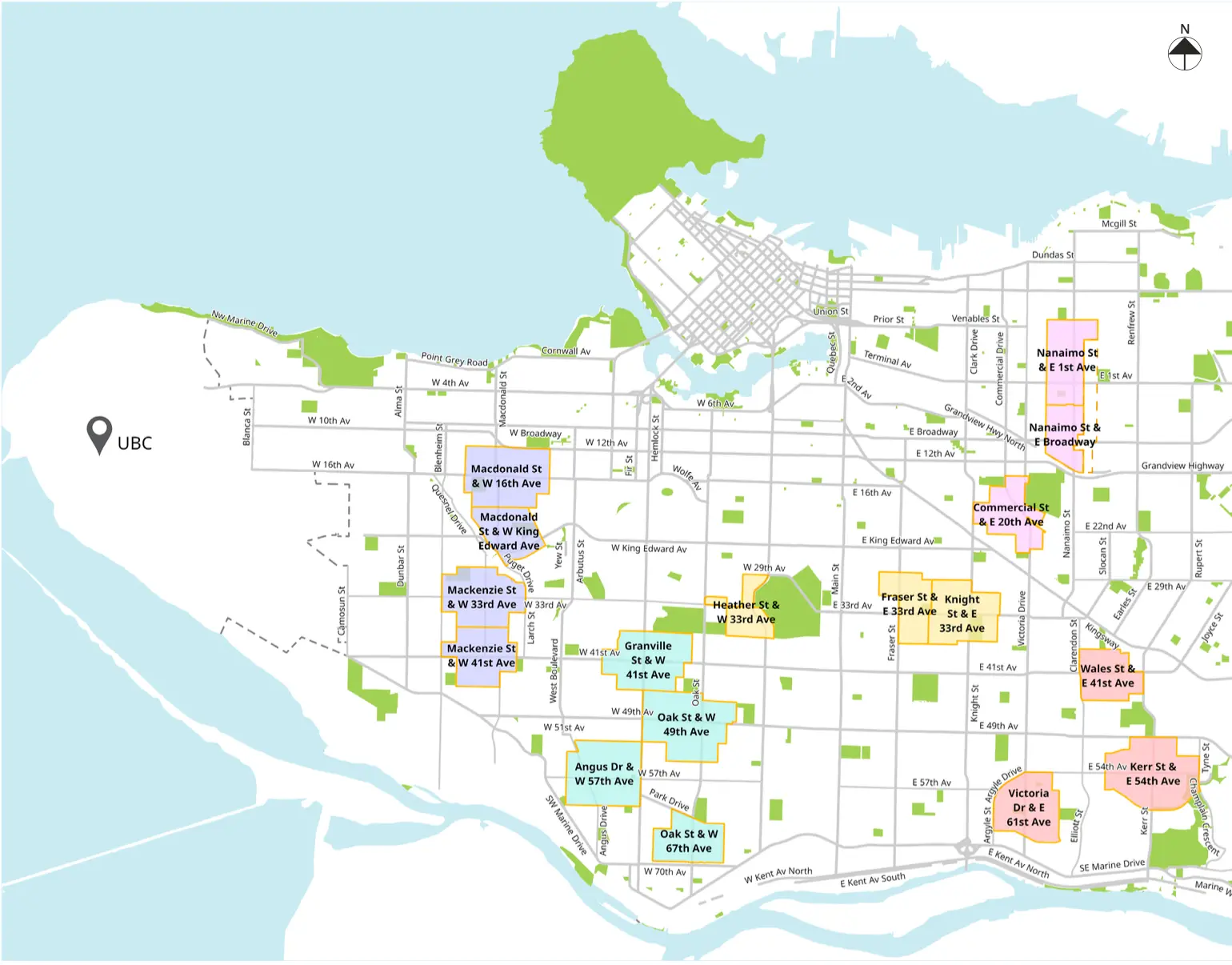
Development Cost Levies (DCLs)
Metro Vancouver Development Cost Charge (DCC)
Density Bonus Contribution
Permit Fees
Total Fee Stack Summary
Room/Area | Entry-Level | Mid-Range | High-end/custom |
|---|---|---|---|
Kitchen | $35,000 – $55,000
| $60,000 – $100,000
| $100,000 – $185,000+
|
Primary Bathroom
| $20,000 – $30,000
| $30,000 – $55,000
| $55,000 – $100,000+
|
Secondary Bathroom
| $15,000 – $25,000
| $25,000 – $45,000
| $45,000 – $75,000+
|
Living / Dining Room
| $20,000 – $40,000
| $40,000 – $80,000
| $80,000 – $150,000+
|
Primary Bedroom
| $15,000 – $30,000
| $30,000 – $60,000
| $60,000 – $100,000+
|
Basement (per 1,000 sqft)
| $50,000 – $80,000
| $80,000 – $150,000
| $150,000 – $250,000+
|
Full Home (2,000 sqft) | $300,000 – $400,000
| $400,000 – $600,000
| $600,000 – $1,200,000+
|
Will It Be Worth It? Understanding Renovation ROI
Type of Renovation | Typical ROI at Resale | Notes |
|---|---|---|
Kitchen Renovation | 60 – 80%
| Highest-impact room for buyer perception and resale value.
|
Bathroom Renovation
| 60 – 80%
| En suites and updated primary baths top the list.
|
Basement Suite Conversion
| 50 – 70%
| Legal suites add mortgage-helper rental income.
|
Whole-Home Renovation
| 50 – 70%
| Higher ROI in premium neighbourhoods.
|
Energy Efficiency Upgrades
| 40 – 60%
| Plus BC Hydro and CleanBC rebates up to $15,000+.
|
Outdoor / Curb Appeal
| 50 – 75%
| First impressions drive buyer interest and perceived value.
|
The Design + Build Advantage: How Integration Saves You Money
The traditional renovation path goes like this: hire an architect, get drawings, then get those drawings priced by contractors – often discovering the design was never buildable within budget. Revisions start. Timelines slip. Costs balloon. At VictorEric, our fully integrated Design + Build process eliminates this cycle entirely.
Here’s why one integrated team costs you less in the end:
Preconstruction alignment
Our construction team reviews design drawings before finalization. Expensive details get value-engineered before a single permit application is submitted – not after the walls are open.
No gap between architect and contractor
When design and construction are the same team, you eliminate communication breakdowns and the adversarial dynamic that causes costly mid-project decisions.
Budget certainty before breaking ground
Our Tendering phase locks in subcontractor pricing against final drawings. You know your number before you commit to construction.
Post-Design Support
Over 25 years, we’ve delivered award-winning home renovations across Vancouver – from character home transformations in East Vancouver to luxury whole-home renovations on the West Side. The result is always an Amazing Space that was worth every dollar.
Frequently Asked Questions
How much does it cost to renovate a house in Vancouver in 2026?
How long does a home renovation take in Vancouver?
A typical whole-home renovation takes 12 to 18 months from first consultation to occupancy – including design, permitting (3 to 6 months for the City of Vancouver), construction, and deficiencies. Kitchen or bathroom-only projects run 3 to 6 months from permit approval.
Do I need a permit to renovate in Vancouver?
Yes, for almost any structural, electrical, plumbing, or layout work. Cosmetic updates such as painting, flooring, and fixture swaps generally don’t require permits. Your contractor should pull permits on your behalf – if they suggest skipping permits to save time, that’s a red flag.
What is the best way to avoid renovation budget overruns?
Three things: hire an integrated Design + Build firm so design is reviewed for constructability before pricing; build a 15 to 20 percent contingency in from day one; and complete permitting and design fully before breaking ground. Most overruns happen when construction starts before plans are finalized.
Are there government rebates available for Vancouver home renovations?
Yes. BC Hydro’s PowerSmart program and the CleanBC Better Homes program offer rebates for heat pump installation, insulation upgrades, and triple-pane windows. A comprehensive energy upgrade package can attract $5,000 to $15,000 or more in rebates. Ask your contractor to incorporate eligible upgrades into your renovation scope.